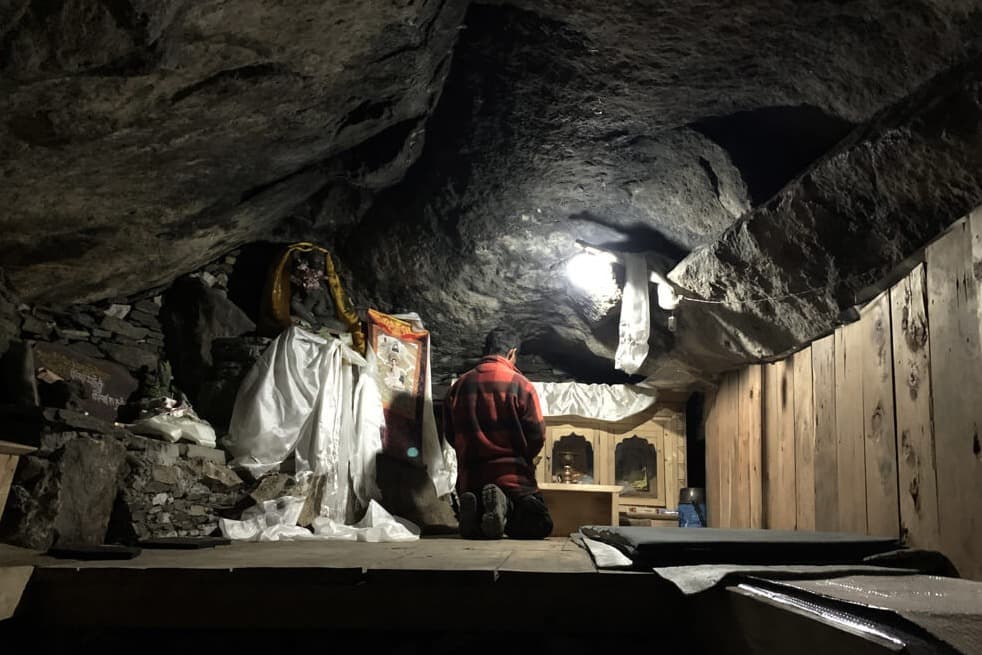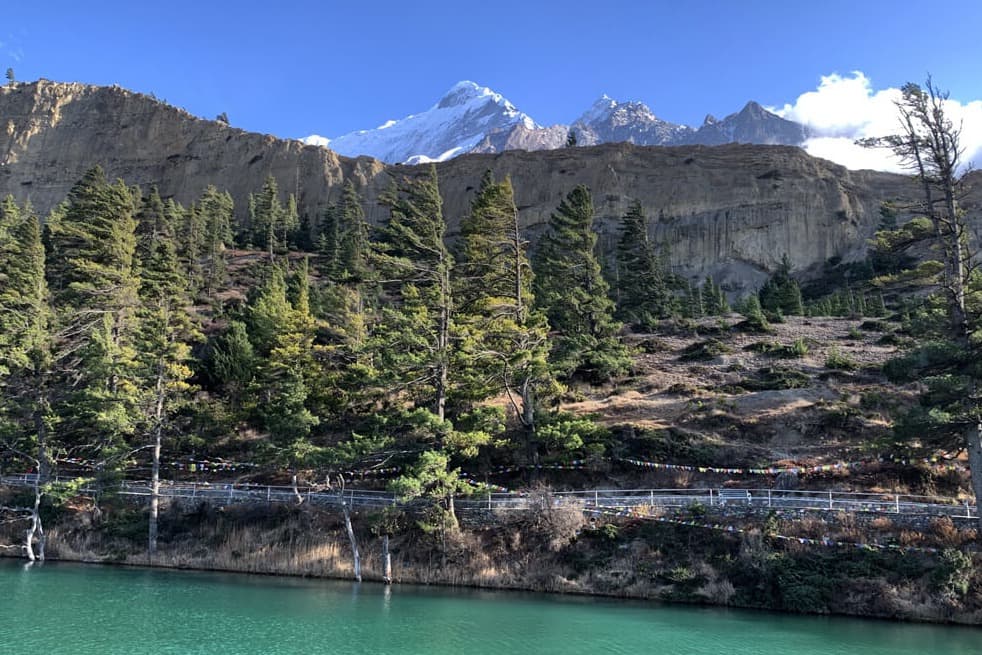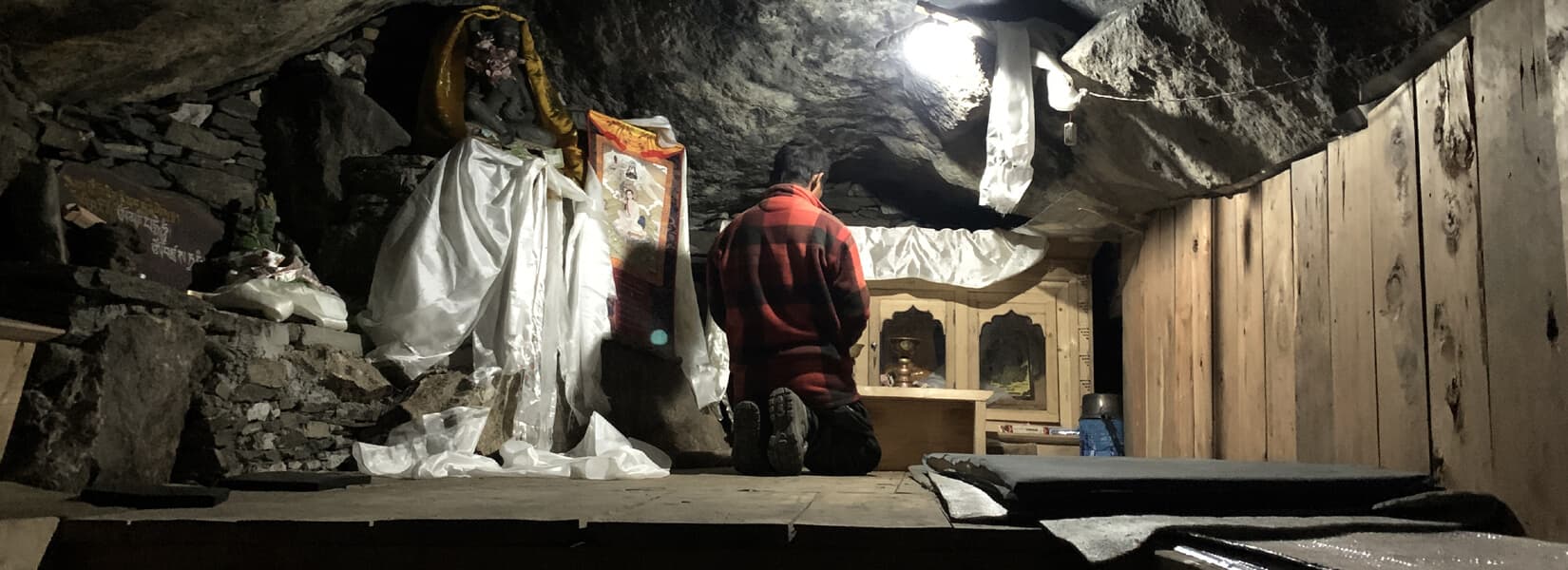

Concerning the prophecy of this hidden land in the Avatamasaka Sutra, it is written in the ‘Hundred thousand songs of Milarepa’ that Marpa told Mila, ‘The Riwo Pelbar mountain in Mangyul and the Yolmo snow enclosure in Nepal are places prophesied in the Avatmasaka Sutra, so meditate there!’
- From the book by Khenpo Nyima Dondrup
Overview
Driving about 80km away from Kathmandu, the hidden sacred land- Beyul, known as Helambu, the place of Hyolmo, is located. The road leads to Helambu from Kathmandu, which will open your gateway to one of the most precious Buddhist pilgrimage destinations in the world. Another way is to start the trek from Sundarijal, and in a few days' trek, you reach this sacred land.
Also named as Lotus Grove, the Helambu valley is blessed with the precious master, known as the Second Buddha Guru Rinpoche, and Tibetan Yogi, singer, and saint Milarepa. After that, several revered Buddhist yogis followed the route and attained enlightenment. This hidden sacred paradise includes several valleys in the Himalayan region of Langtang and Helambu. In short, the Hylmo region is loaded with precious caves, monasteries, and natural jewels, including the Himalayan peaks.
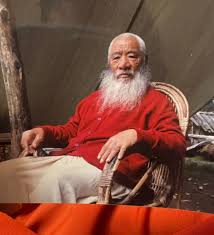
Photo: (Chatral Rinpoche) cited from Pema Lotus Instagram
Hyolmo is a truly blessed land, often referred to as the Hidden Snow Enclosure. Nestled within its sacred landscape are numerous meditation caves where great masters of the past, including Guru Rinpoche and the yogi Milarepa, engaged in profound spiritual practice and subdued the local spirits. Even today, one can sense the powerful presence of these realized beings, as well as the enduring blessings of the Mahasiddha Kyabje Chatral Rinpoche, who in more recent times established many retreat centers throughout the region.
- As directed by Marpa, Jetsun Milarepa (1041-1123) spent three years in the Lion Fort Tiger Cave in Yolmo, planted the banner of spiritual attainment, and perfected his realization.
- The first Nyingmapa temple was founded there in the 14th century, and it is believed that the great Terton and Vidhyadhara Ngakchang Shakya Sangpo opened the hidden valley of Yolmo and founded the temple called Tsuti. He revealed the instructions on Mahakarunika, liberation of Samsara into the expanse of space.
Guru Rinpoche (Padmasambhava) declared that to protect sentient beings in the age of five degenerations, a great temple should be founded on the western mountain resembling a queen with a flowing robe in the great hidden land of Yolmo, enclosure of snows.
- First temple of the Changter tradition in Yolmo is Yangri Gang
- Second is Tsuti Gompa
- Third is the Amitabha chapel at Melamchi
- Fourth is Padma Choling hermitage monastery at Langra Gyalsa
As mentioned in the Collective understanding of all the Buddha’s Sutra: ‘To meditate in such places for a single day brings one nearer to accomplishment than a year of meditation in an ordinary place.
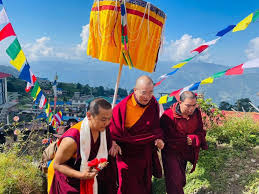
Image: sermathang.com
Most recently, Kyapjé Chatral Rinpoche (1913–2015) spent many decades in retreat here. Evoking both the landscape's striking beauty and its profound spiritual power, he wrote:
“In this snow-encircled, broad sandy plain, Padmasambhava concealed innumerable profound Dharma treasures. Here, realization and virtue arise naturally, enhancing the practice of view, meditation, and conduct. For practitioners of rushen and chöd, there is no place superior to this. This hidden land of Padmasambhava, free from worldly conflict, is no different from the eight great charnel grounds of India.”
Although this revered master has passed into parinirvāṇa, many of his closest disciples continue to reside in Helambu. Their presence reflects the enduring power of this sacred landscape, which remains a place of deep practice, realization, and blessing.
Major Guru’s meditation caves, Lakes, and Places (mentioned in the book by Khenpo Nyima Dondrup)
- The Yangdak Chok meditation cave: the heart of this sanctuary, the meditation cave of Guru and his consorts
- Jemathang (Bemthang)-sand plain: the place where Kyapjé Chatral Rinpoche actually saw a four-storey tall figure of Dorje Drolo
- Marku Tsho-lake of clarified butter
- Tongshong cave: cave of the guru, reopened by Kyapjé Chatral Rinpoche
- Yangri Gang: the temple of the prophecies on the Yangri mountains, where Godem's disciple Drupchen Palden and others founded temples
- Chhati Gang: a mountain, the abode of the protector Chhati Lhatsen
- Tshokar Tshonak- Gosaikunda (4380 meters): the insider Buddhists regard it as the palace of Chakrasamvara, but for Rikdzin Je, it was the palace of the goddess Remati, to the north east of Vajrasana
- Yolmo Nortsho- the lake of Yolmo’s wealth
- The Nyinda Rangjon meditation cave: main sites associated with Guru Rinpoché. Statues of Guru Rinpoché and his consorts can be seen, and it is believed that Guru Rinpoche and his consort meditated in the cave, where you will see the image of the moon and the sun.
- Khangdro Sangphuk: the secret dakini cave, which Guru Rinpoché dug himself (Melamchi Ghyang)
- The Amitabha temple at Milamchi Gyang: the seat of Zilnon Wangye
- The Guru’s jewel millstone
- Orgeyn Pesha- the Guru’s lotus hat
- Nakote: a monastery of the Changter tradition
- The self-manifest stone stupa
- Neding: a small retreat house surrounded by prayer flags, which served as one of Chatral Rinpoché’s meditation places.
- Self-manifest conch
- Tsuti Gon monastery (Churi Gompa): the region’s first recorded monastery. It was originally built by Shakya Zangpo, who discovered and opened the beyul.
- Drunpe Pema Choling
- Drupe Drong: also known as meditators’ village, where students of Chatral Rinpoché still live and practice. There Rinpoche meditated for several years.
- Gotsang Ling
- Lhakhang: monastery of the Rainbow tradition, and meditation hut of Chatral Rinpoche
- Yolmo Bhakhang Tashi Ghyatsho Monastery: founded by the previous incarnation of Drukpa Rinpoche
- Takphuk Senge Dzong- Lion fort tiger cave: the meditation cave of Jetsun Milarepa
- Gang Yul: monastery of the Rainbow tradition, monastery of the Drukpa Kagyu order, and a Gelukpa nunnery
- Shingkum Che: a stupa containing the remains and relics of Humla Rinpoche Kunga Dorje
- Chhumik- spring: a monastery of the Rainbow tradition
- Sermathang: a monastery of the Rainbow tradition, and a meditation hut of Chatral Rinpoche
- Kazhe: a monastery of the Changter tradition
- Peltsok: a monastery of the Changter tradition
- Tunbu: also known as Timbu, this is the place to make cake offering rituals to the Guru
Best Time for Helambu/Yolmo Meditation Trek
Spring:
Spring is a flower blooming time. Even the weather is favorable for the trek and tour. It may rain occasionally in the evening, but still a good time for traveling in Nepal.
Autumn:
Autumn is a great time to travel. The weather is not too cold and not too warm. This is also a festival season in Nepal. So, you will get a chance to get into the cultural insights.
Winter:
Since the altitude is comparatively lower, you can enjoy the Helambu tour/trek in the winter. If you trek from Sundarijal, the highest pass will be Tharepati Pass (3690 meters). Going by road will be in lower altitude, and you can enjoy the trip visiting monasteries and meditating in the caves of Guru Rinpoche (Padmasambhava), especially in the Melamchi Gaon.
Himalayan Views from Helambu
- Jugal Himal Range: Amazing mountain seen closely.
- Dorje Lakpa (6,966m): Pyramid-like shape.
- Gangchempo (6,387m): A stunning peak often called the “Yellow Mountain.”
- Gaurishankar: visible in clear weather
Itinerary
Day 01: Drive to Sundarijal, trek to Chisapani.
Day 02: Trek from Chisapani to Kutumsang.
Day 03: Trek from Kutumsang to Tharepati.
Day 04: Trek from Tharepati to Melamchi Ghyang.
Day 05: Trek from Melamchi Ghyang to Tarke Ghyang.
Day 06: Trek from Tarke Ghyang to Sermathang.
Day 07: Drive from Sermathang to Kathmandu.
Buddhist Tour Booking and Inquiry
WhatsApp: +9779849213957 (also better to do email)
Email: [email protected]