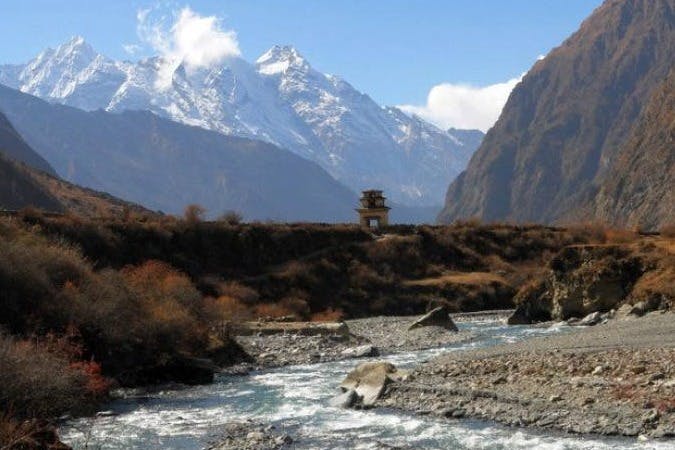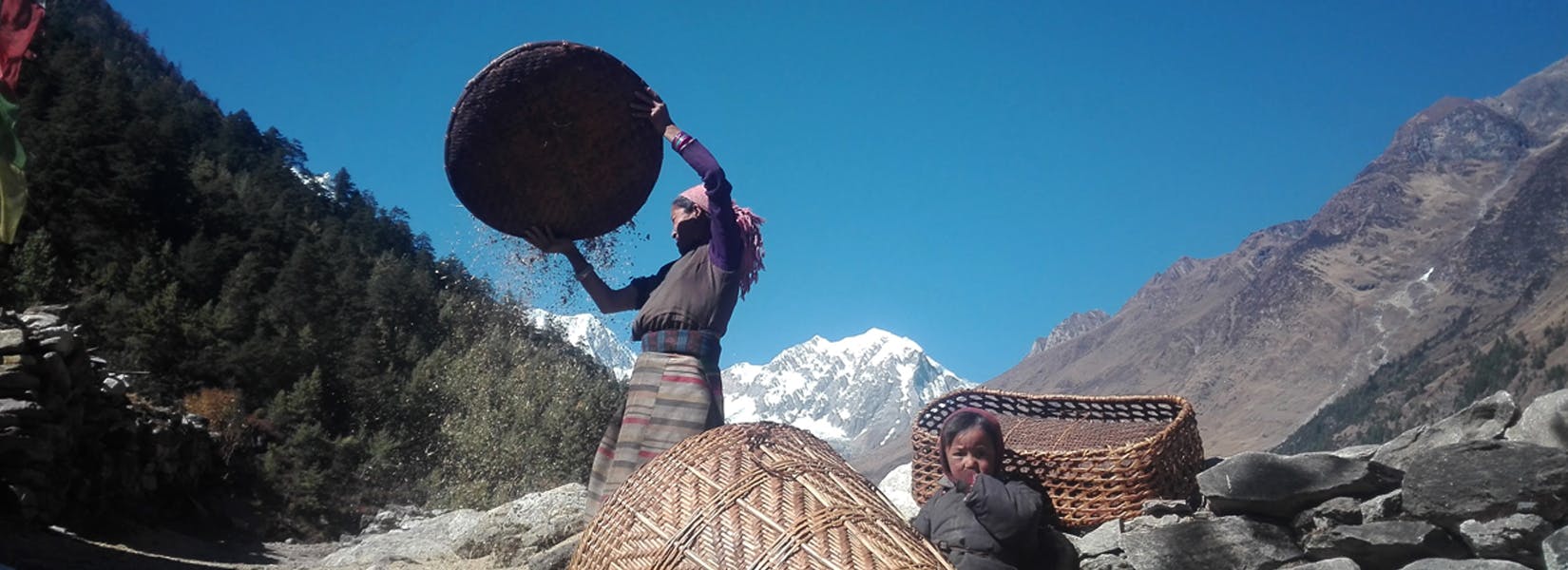
Exploring the Tibetan Buddhist communities, the Manaslu Circuit Trek goes over the adventurous Larke Pass and offers the astonishing scenery of the Manaslu Himalayas.
Manaslu Circuit Trek offers an opportunity to explore the aura of the Manaslu region. It is loaded with natural and cultural diversity. Larke Pass (5165 meters) is the highest point of the trek, which is the ultimate adventure spot to cross this high pass. The trek begins in the stunning Budi Gandaki Valley it leads you through the Tibetan Buddhist communities.
The Manaslu circuit trail is incredible. In the beginning, the terraced fields and green hills above the Budi Gandaki River allure you. The trail is quite challenging, and frequently you have to walk along the jaw-dropping rocky boulders. This Round Manaslu trekking route is also a pocket zone of snow leopards, bounded by the Manaslu Conservation Area Project (MCAP). Heading towards the alpine zone, the treeless region begins that is dominated by meadows. The high pass region is dominated by the glacier Lake, and offers an exclusive view of the world’s 7th highest peak, named Manaslu (8156 meters), and its vicinity. Even after descending to the Annapurna region, the trek lets you feel the pleasure of walking with eye-catching waterfalls and streams.
so popular
Manaslu Circuit Trekking itinerary can be customized. You can connect this trek with the Tsum Valley route to have extended cultural exploration. March to May and September to November are perfect seasons for the Manaslu Circuit Trekking. Acclimatization is a primary concern. For more information, please feel free to contact us.
WhatsApp: +977 9717012335 (also better to send email)
After the trek, why not a 3-day jungle safari relaxing program? You can check out our 3-day Chitwan Jungle Safari Tour.
The best season/time for the Manaslu Circuit Trek
Spring: March-April-May
Autumn: September-October-November
Manaslu Circuit Trek is an adventurous excursion in the Himalayan terrain and for this, it's better to catch the best time to cross the high Himalayan pass. Spring welcomes trekkers with an abundant number of wildflowers in the alpine terrain. Along with the majestic Himalayan views, it offers you a clear sight of the cultural perspective. March is the beginning of the trekking season and April will be the ideal month for the high pass trek.
Let's talk about the second-best time to trek, which is actually regarded as truly the best time for the Himalayan journey. Mid-September welcomes trekkers after the end of the monsoon. October, which is also the festival time in Nepal, is the best month of the year for the mind-blowing views and perfect weather for the excursion on the Manaslu Circuit route. Till November, the Manaslu Trek can be done amazingly before the snowfall begins.
Accommodation in Manaslu Circuit Trek
Once, the Manaslu Circuit Trek was a tent camping-based route. But now, there are hotels, lodges, and restaurants that have made food and accommodation easily accessible. The hotel and lodge rooms are clean and cozy. You can take a hot shower in every hotel but need to cover the extra cost. The beds will be clean however, if you have any doubts, you can use the sleeping bag.
Food availability in Manaslu Circuit Trek
A wide range of food menus is available at all the overnight stops during the Manaslu Circuit Trek. Typical Nepali Dishes, Chinese, Indian and continental food items are available.
-Dal Bhat Power, 24-hour (Rice, lentil, curry, papad, pickle, meat)
-Chapati, curry
-Mo: Mo (dumplings)
- Pizza
-Noodle
-Thukpa etc.
High altitude sickness in Manaslu Circuit Trek
Manaslu Circuit Trek's ultimate altitude is 5165 meters, which is Larke La Pass. The thin air makes it tough to breathe if you don't acclimatize well. Thus, proper acclimatization is essential to avoid Acute Mountain Sickness (AMS). In the case of mountain sickness, you will get some symptoms, and you need to follow some procedures.
- Trek gradually
- Drink plenty of water
- Drink hot soup mixed with garlic
- Sleep being warm
- Don't trek high if you feel dizziness, vomit, fever, insomnia, or any other high altitude sickness symptoms